Black Marlin Defense Weekly: 8th September, 2025
“You will not find it difficult to prove that battles, campaigns, and even wars have been won or lost primarily because of logistics.”
– General Dwight D. Eisenhower
The Quiet Shift in American Defense Posture
As the 2025 National Defense Strategy (anticipated release: Q4 2025) looms, early indicators suggest a renewed focus on the Western Hemisphere and homeland resilience. NORTHCOM’s evolving mission, recent DHS initiatives, and a growing drumbeat across Congressional defense committees all signal one thing: the U.S. must prepare for threats not just abroad but inside the maritime approaches to our own ports and coastlines.
Why Strategic Seaports Matter Now
The U.S. operates one of the most complex and powerful global logistics networks in the world, but its dependence on a handful of designated “strategic seaports” for power projection and sustainment is a critical vulnerability.
These ports, administered under the Department of Transportation’s Maritime Administration (MARAD), in partnership with DoD, are essential to:
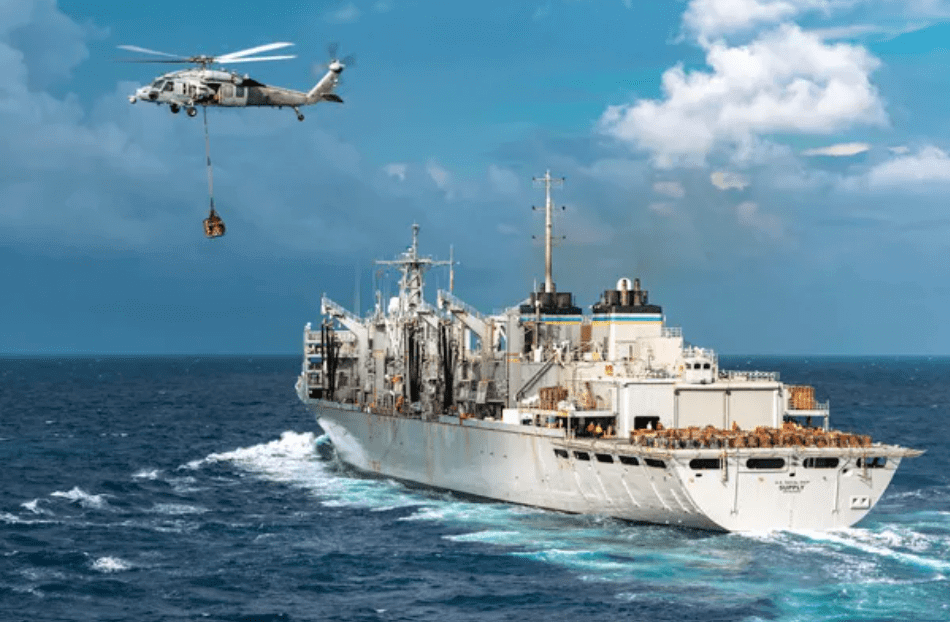
- Mobilizing reserve sealift (Ready Reserve Force, MSC)
- Supporting Army and Marine deployments
- Receiving emergency shipments during crises
- Maintaining wartime fuel and ammunition supply lines
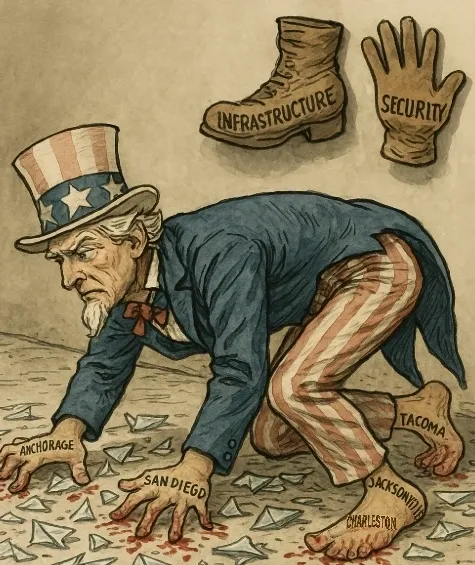
But many of these ports are not hardened against modern threats. This concern was central to a series of 2024 Congressional hearings, where lawmakers and national security officials sounded alarms about foreign-made infrastructure, cyber vulnerabilities in port equipment, and the lack of coordinated defense planning across maritime domains. These hearings revealed that although ports are the backbone of U.S. logistics and national response capabilities, they remain exposed to espionage, sabotage, and cyber interference, particularly from adversaries operating just outside U.S. territorial waters.
Despite these known weakness’s, today most port security funding (via FEMA’s Port Security Grant Program) is focused on land-side interdiction, ignoring waterside vulnerabilities like:
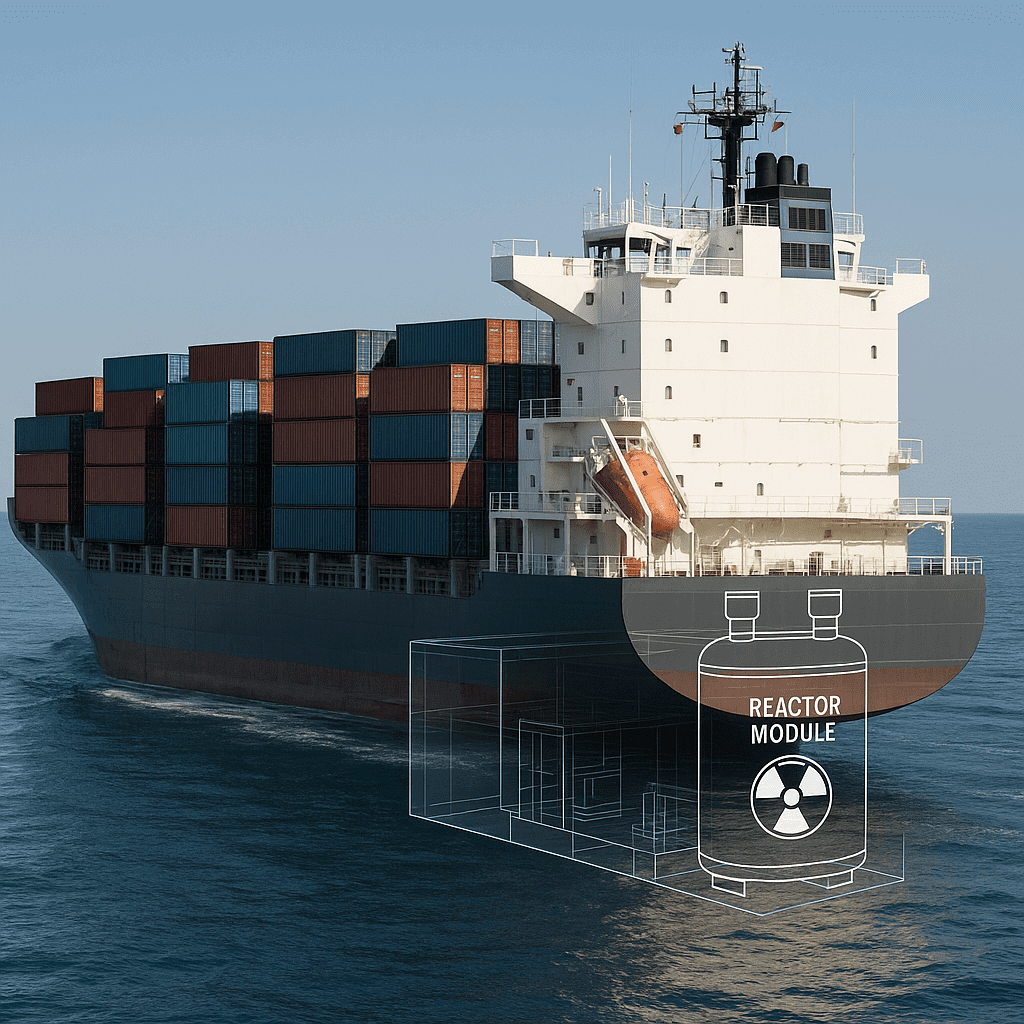
- Unmanned or dual-use vessels operating near anchorages
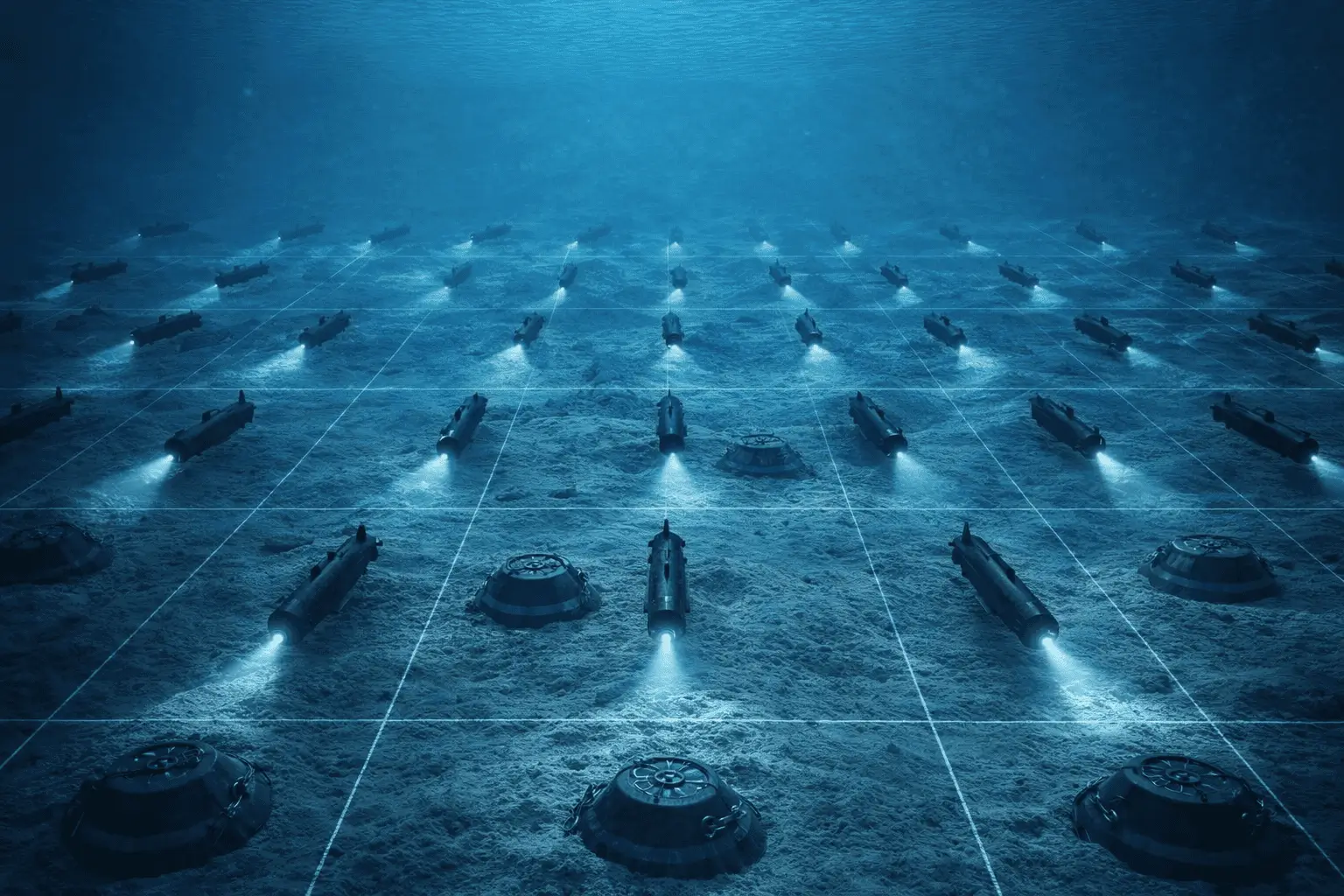
- Seabed cable sabotage near port berths
- AIS spoofing or GNSS interference from offshore vessels
- Low-signature platforms entering port security zones
In essence, our strategic seaports are soft targets for gray zone disruption.
Why a Cross-Agency Task Force Under NORTHCOM May Be Needed
Rather than developing an entirely new posture, the U.S. can use its existing architecture to coordinate a defense-in-depth maritime strategy:
NORTHCOM: Could convene and lead a Joint Seaport Threat Assessment Working Group
TRANSCOM/MARAD: Coordinates port designation, RRF surge capability
DHS/FEMA/USCG: Own authorities for MDA (Maritime Domain Awareness) and critical infrastructure protection
DOT: Owns many commercial port partnerships
DOE/DOD: Responsible for infrastructure like energy ports and seabed cables
Together, this working group could develop a Western Hemisphere Seaport Resilience Strategy by 2026 focused on:
- Surface and subsurface overt patrol operations
- Integrate uncrewed platforms into surveillance and detection systems
- Continuous strategic seaport seabed/infrastructure monitoring
- Public-private emergency drills
- Strengthen domestic equipment manufacturing
- Fusion of NOAA, USCG, and commercial hydrographic data
Existing authorities at DHS, DOT, DOD, DOE, and DOC agencies should be harmonized, leveraging congressional momentum and executive policy alignment. This is especially relevant as the 2025 National Defense Strategy emerges.
Conclusion: No Excuses Left at the Water’s Edge
It should not take a mine, a portside explosion, or the loss of American life to act on what Congress has already made clear: our strategic seaports are exposed, and our adversaries know it. The warnings have been issued, the hearings held, and the vulnerabilities documented. We do not need to reinvent policy or create new authorities. The tools are already in our hands: uncrewed systems, sensor networks, maritime domain awareness frameworks, and a legacy of public-private coordination. What we need now is focus, urgency, and leadership. As the coming National Defense Strategy will likely affirm, the next phase of homeland defense begins in the Western Hemisphere. And at its core lies a timeless military truth: logistics win wars.
Let’s not wait to defend the very arteries we’ll rely on to win the next one.