
Black Marlin Defense Bi-Weekly: September 12th, 2025
Introduction
Venture investors have learned to diligence SaaS, aerospace, and even space launch. Maritime autonomy is a different world. The market sits at the intersection of national security and global commerce, but its acquisition pathways, technical barriers, and operating environments make it far more complex than familiar frontier tech plays.
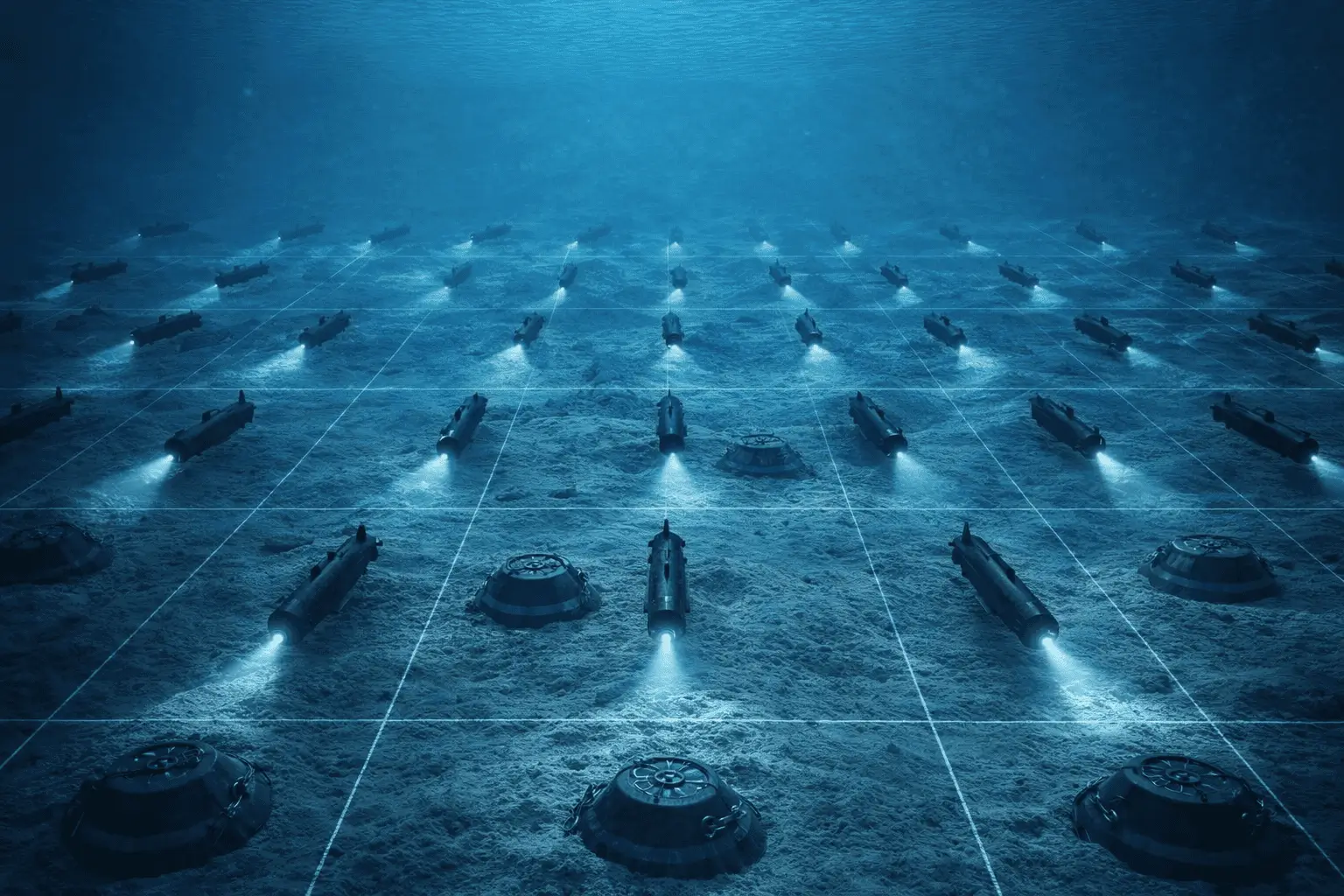
Today, the gravity in this space is still dominated by Programs of Record (PoRs). They provide stability, standards, and multi-year funding streams, but they also slow iteration and prevent Moore’s-law style advances. For attritable unmanned systems, that rigidity is misaligned. These systems may be better understood as consumables; closer to small arms, ammunition, or artillery shells than exquisite ships. The question for investors is how to value them now, and what frameworks will apply if acquisition models evolve.
The REMUS Case Study
The Woods Hole Oceanographic Institution’s REMUS AUV (Remote Environmental Monitoring UnitS), which the Navy later fielded as the Mk 18 Mod 1 and 2, became the archetype of how an autonomous undersea vehicle enters the mainstream.
Why REMUS?
- Reliability at sea: It delivered predictable performance in environments where others failed.
- Clear mission fit: Mine countermeasures provided an urgent operational need.
- Early adoption momentum: Once deployed successfully, it snowballed into a PoR.
For Huntington Ingalls Industries, acquiring Hydroid (the REMUS spinoff) was a logical move. The platform was entrenched, trusted, and aligned with Navy standards.
Historic Value perspective: REMUS succeeded because it created predictability of revenue through a PoR. That remains the most straightforward valuation lens for maritime startups today: the ability to move from trials to entrenched program status.
But is this the future? Attritable systems, shifting acquisition authorities, and emerging dual-use markets suggest the next billion-dollar maritime exit may not look like REMUS at all. Investors need to prepare for a valuation landscape that prizes interoperability and IP as much as entrenched program momentum.
Programs of Record: The Double-Edged Sword
Programs of Record remain the most reliable pathway for scaling a maritime platform. Their strengths are clear:
- Provide common standards and uniformity across the force.
- Lock in multi-year budget commitments.
- Reduce chaos by ensuring interoperability in joint and coalition operations.
But their weaknesses are just as real:
- Complex and laborious acquisition cycles.
- Designed for stability, not rapid iteration.
- Slow to adapt, especially for attritable systems that should evolve quickly.
PoRs are like railway gauges. They are essential for uniformity, but once locked in, they restrict how quickly new designs can be adopted. For attritable unmanned vehicles, this creates a mismatch. Commanders need the ability to procure these systems like firearms or ammunition; consumable, rapidly replaced, and constantly iterated compared to waiting years for a PoR to grind forward.
Value perspective: For VCs, PoRs create stability and revenue visibility, but they also cap upside. The firms that can deliver consumable models inside or outside the PoR system may offer more scalable growth and asymmetric returns especially with changes in policy allowing for larger purchase thresholds.
The Language Problem
A deeper problem in maritime autonomy isn’t propulsion or endurance. It’s language. Every service, and often every program, speaks in its own stovepiped command-and-control dialect. Integration is costly and slows adoption.
The OUSD(R&E) Test Resource Management Center (TRMC) is addressing this challenge in other domains through Unified Command and Control (UC2). UC2 functions as the hub in a hub-and-spoke model:
Hub: UC2 itself, the overarching common framework.
Spokes: legacy or proprietary languages that individual systems still use.
Connection point: adapters, which translate each system’s dialect into UC2. Once created, an adapter becomes a reusable library module, like a dictionary that can be pulled off the shelf whenever needed.
UC2 provides overarching scope, high fidelity, and an agreed-upon structure. But in the maritime domain, no such framework exists yet. Many startups are trying to lock in proprietary control of C2 — the old Anduril model with Lattice. But the government has gone the opposite direction: no vendor lock on C2. If command and control depends on a subscription, the risk is existential.
The likely future is an agentic AI hub that can translate between systems in microseconds, or a government-owned framework like UC2 that speaks all published dialects.
Value perspective: For VCs, the moat will not come from locking in a proprietary C2. It will come from designing platforms with ease of translation into government-owned lexicons. Companies that position themselves for plug-and-play compatibility will preserve value, while stovepiped systems will be stranded assets.
The Dual-Use Imperative
Maritime startups cannot depend on defense alone. The attritable systems being designed for reconnaissance, surveillance, and environmental sensing have strong dual-use potential:
- Undersea mining and offshore energy: Mapping and monitoring subsea infrastructure.
- Environmental and climate science: Collecting oceanographic data at scale.
- Commercial exploration: Supporting oil, gas, and renewable offshore projects.
- Scientific research: Expanding the reach of academic institutions without manned expeditions.
Dual-use isn’t just about impact. It’s about resiliency of revenue. Companies that demonstrate traction in commercial domains expand TAM, buffer against DoD budget cycles, and increase exit pathways beyond primes.
Value perspective: Dual-use traction provides VCs with an insurance policy. It derisks dependency on a single PoR and supports higher valuation multiples by demonstrating broader applicability.
Metrics That Matter for Investors
Standard venture playbooks fall short in this domain. EBITDA multiples or TAM slides are not enough. Smart diligence should focus on:
- Reliability and Trust: Mean time between failure, operational hours on station, recovery rates. Within Navy circles, REMUS became the safe bet — the system against which others were measured
- Adoption velocity: Number of units trialed by commands, allies, or commercial customers.
- IP defensibility: Proprietary autonomy stacks, GPS denied precision navigation and timing, propulsion designs, and digital twins.
- Integration cost: How easily does the system plug into Navy and allied command-and-control environments?
- Dual-use traction: Evidence of pilots or contracts outside the Department of Defense.
These metrics give a truer picture of value than forward-looking revenue slides alone.
Conclusion
REMUS showed what success looked like in the old model: prove reliability, ride Program of Record momentum, and become a prime acquisition target. But the future may look different.
If commanders gain greater authority to procure attritable systems as consumables, valuation shifts from PoR-driven stability to IP, interoperability, and dual-use scalability. And if a maritime equivalent to UC2 emerges, the most valuable companies will be those already designed for seamless translation into government-owned lexicons.
Value perspective: For defense-tech VCs, the challenge is to build due diligence frameworks that account for the entrenched PoR system of today, and the consumable, IP-driven, interoperable future that is emerging. Those who get this right won’t just capture upside, they will help define the future of maritime security.