Maritime Defense Innovation Enters the Nuclear Age
The global maritime industry is approaching an unavoidable energy transition. Diesel Fuel Marine and heavy fuel oil have powered world commerce for roughly a century, but regulatory pressure, carbon economics, and energy security concerns are forcing shipowners to consider alternatives that go far beyond incremental fuel efficiency. A structural shift is coming. Nuclear propulsion, particularly using thorium-based molten salt reactors, is emerging as a candidate technology capable of redefining commercial and defense logistics at scale.
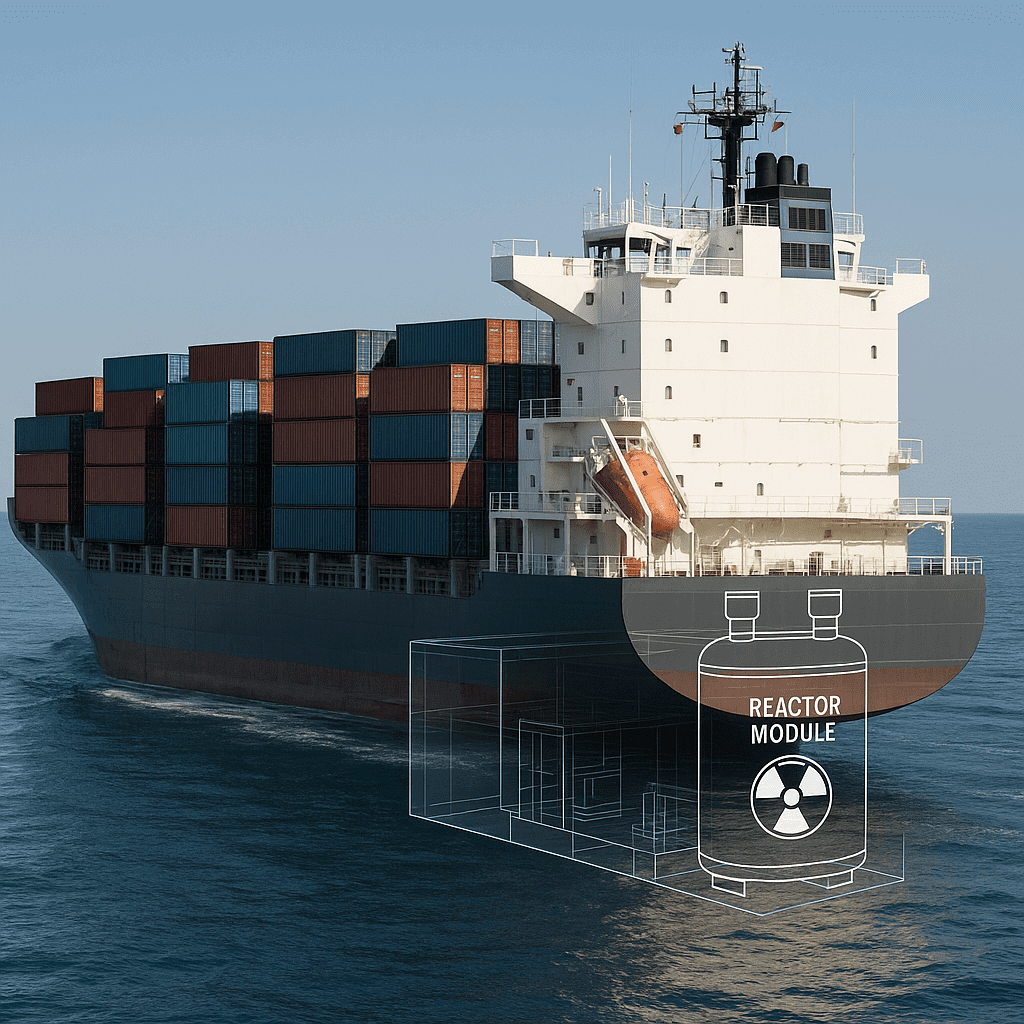
In November 2025, China announced the first successful operation of a thorium molten-salt reactor producing sustained nuclear fission. Researchers at the Shanghai Institute of Applied Physics further confirmed on-line refueling of the reactor, a milestone that fundamentally differentiates molten-salt designs from traditional nuclear systems. In parallel, Chinese shipbuilders unveiled design work on a thorium-powered container vessel reportedly capable of carrying up to 14,000 TEUs using a molten-salt reactor with an estimated 200-megawatt thermal output.
These developments mark the first credible evidence that nuclear propulsion is moving into the commercial domain at modern scale, not limited to warships, icebreakers, or experimental platforms.
Why Innovation in Nuclear Energy Changes the Logistics Equation
Thorium reactors operate differently from conventional nuclear plants. Thorium-232 is not fissile, but it is fertile. When it absorbs a neutron, it converts into uranium-233, which then sustains fission. This process enables stable energy generation while reducing long-lived radioactive waste relative to uranium and plutonium fuel cycles.
From an engineering standpoint, molten-salt reactors offer structural advantages particularly well suited to maritime environments:
- Operation at atmospheric pressure reduces catastrophic failure risk
- Liquid fuel eliminates solid rod failure modes
- The Passive shutdown systems allow fuel to gravity-drain if overheating occurs
- Continuous fuel processing increases endurance and reduces maintenance cycles
From a strategic standpoint, thorium offers energy abundance and geopolitical resilience. Thorium is far more plentiful than uranium, widely distributed globally, and mitigates supply-chain vulnerability. Unlike conventional nuclear fuel cycles, thorium is significantly more resistant to diversion or weaponization due to radiation contamination in byproducts that complicate handling.
For shipping, the operational consequences are dramatic. A thorium-powered vessel could operate for years without refueling. This removes exposure to fuel markets, supply logistics, and carbon taxation. Operational cost shifts from bunkering infrastructure to maintenance and compliance, a fundamentally different business model.
The Regulatory Bottleneck in Nuclear Maritime Innovation
The greatest obstacle to nuclear-powered shipping today is not reactor physics. It is regulation.
The international maritime regulatory system is designed around petroleum engines, not advanced nuclear propulsion. The governing framework for nuclear vessels remains the Code of Safety for Nuclear Merchant Ships, adopted in 1981 under a different technological era. These rules were written for pressurized water reactors derived from naval reactor programs, not molten-salt reactors or modular civilian power units.
The International Maritime Organization has now acknowledged this gap. In 2025, its Maritime Safety Committee formally initiated a review of nuclear vessel regulations with the intention of accounting for new reactor technologies and floating nuclear platforms. The revision effort is underway and is expected to evolve throughout the second half of this decade.
This process will not be simple. Nuclear propulsion introduces new demands in:
- Inspection authority
- Liability framework
- Reactor certification
- Flag-State compliance
- Decommissioning accountability
- Insurance underwriting
- Port entry approvals
Until international standards mature, nuclear propulsion will remain legally viable only under narrow regulatory exceptions.
Maritime Community’s Historical Regulatory Avoidance
A second structural challenge is manufacturing readiness.
Most commercial shipyards are not suited for nuclear construction. Reactor integration requires nuclear-grade materials, radiation safety infrastructure, precision machining, and regulatory oversight beyond the scope of most civilian yards. Retooling shipbuilding capacity is not a marginal investment.
Additionally, there is also geopolitical risk in how nuclear propulsion interacts with flags of convenience. If reactor-equipped vessels are registered under jurisdictions with weak regulatory enforcement, the risk profile becomes asymmetric. Substandard safety practices at sea would carry consequences beyond individual companies, including diplomatic, environmental, and insurance ramifications.
Critically, however, the environmental comparison is often incomplete. Conventional shipping catastrophes have caused massive ecological damage without nuclear involvement. The grounding of supertankers, engine fires, and fuel spills have destroyed coastlines and fisheries in minutes. Nuclear propulsion, if engineered and governed properly, could eliminate millions of tons of diesel emissions and drastically reduce spill risk.
The issue is not whether nuclear at sea is dangerous. The issue is whether fossil-fuel shipping has been normalized as safe despite a long record of environmental harm.
Dual-Use Reality
The strategic implications of maritime nuclear propulsion extend well beyond shipping.
The same reactor architecture designed for commercial shipping applies directly to logistics vessels, offshore platforms, polar operations, and remote base infrastructure. Therefore, a modular molten-salt reactor capable of powering a container ship is also capable of enabling persistent operations at locations that would otherwise require vulnerable fuel delivery.
This is where defense, maritime commerce, and technology investment converge.
Nuclear power at sea is not just a civilian problem.
- It is a deterrence problem
- It is a logistics resilience problem
- It is a technology governance problem
- Lastly, it is venture opportunity
Perspective from Black Marlin Defense
The transition to nuclear propulsion at sea will not be led by shipyards alone. It will be led by capital, compliance, strategic foresight, and organizations capable of bridging defense innovation with commercial application.
Thorium reactors sit at the intersection of energy technology, maritime modernization, defense infrastructure, and geopolitical competition. Therefore, they demand deeper understanding than conventional maritime consulting or venture diligence provides.
This is the environment where Black Marlin Defense operates.
Our advisory work focuses on evaluating advanced maritime technologies through the same lens used by defense RDT&E offices, acquisition leaders, and private capital assessing dual-use programs. Founders navigating deep-technology commercialization, investors evaluating regulatory risk, and government stakeholders modernizing logistics systems face the same strategic questions.
- What is viable
- What is scalable
- What is defensible
- What survives regulation
The future of maritime propulsion is not defined by fuel alone. It is defined by governance, industrial scale, and strategic relevance. Thorium reactors represent a rare category of innovation that touches all three.
Follow us on LinkedIn for more content: