
Black Marlin Defense Weekly – July 2, 2025
In the flood of policy papers and strategy rollouts, it is easy to dismiss the Pentagon’s talk of rapid acquisition as aspirational. But sometimes the money finally catches up with the messaging. This time, it has. Congress has advanced a reconciliation bill that earmarks $1 billion specifically to expand programs accelerating the procurement and fielding of innovative technologies, as outlined in Section 20005, Subsection (16) of the legislation:
“$1,000,000,000 for the expansion of programs to accelerate the procurement and fielding of innovative technologies.”
This line item represents a transformative infusion for the APFIT initiative. In 2026 awards, the Department of Defense allocated only about $400 million to APFIT proposals, leaving many credible, field-ready systems unfunded. This new appropriation has the potential to double or triple the number of awards that receive the full requested amount.
If the Department wants to prove that APFIT is more than a pilot project, this is how you do it. Companies that were discouraged before should look hard at this opportunity. There is a real possibility that with this scale, rolling submission windows or a second submission set could be created to ensure funds are obligated quickly.
*Shipbuilding Capacity and Readiness (Section 20002)*
What It Does:
Expands funding for shipbuilding and revitalizes the industrial base capacity required to meet fleet readiness goals.
Why It Matters:
Matt Sermon, Program Manager, Maritime Industrial Base, Assistant Secretary of the Navy for Research, Development and Acquisition, has emphasized again and again that we cannot expect to maintain maritime deterrence while relying on a hollow production base. Building hulls is only half the battle. Sustaining them, integrating autonomy, and generating a predictable production rhythm is the real test.
How It Helps Ventures:
Companies working on modular payloads, control software, or hybrid propulsion systems will see more opportunities to integrate with new platforms and recapitalization programs. When the Navy buys more ships, it creates a pull for complementary systems that can deliver asymmetric value.
*Munitions and Defense Supply Chain Resiliency (Section 20004)*
What It Does:
Invests in strengthening munitions manufacturing and fortifying supply chains that have been exposed as fragile.
Why It Matters:
As we have watched peer competitors surge production, it has become clear that our advantage is perishable. Stockpiles are finite, and replenishment timelines are unacceptably long. If a crisis emerges, the gap between readiness and rhetoric will become impossible to ignore.
How It Helps Ventures:
This funding will support companies producing everything from guidance subsystems to critical energetics. For firms able to pivot fast, the incentives are finally lining up to scale.
*Scaling Low-Cost Weapons Into Production (Section 20005)*
What It Does:
Provides funding and contracting authority to move lower-cost, high-volume systems out of the perpetual demonstration phase and into real operational use.
Why It Matters:
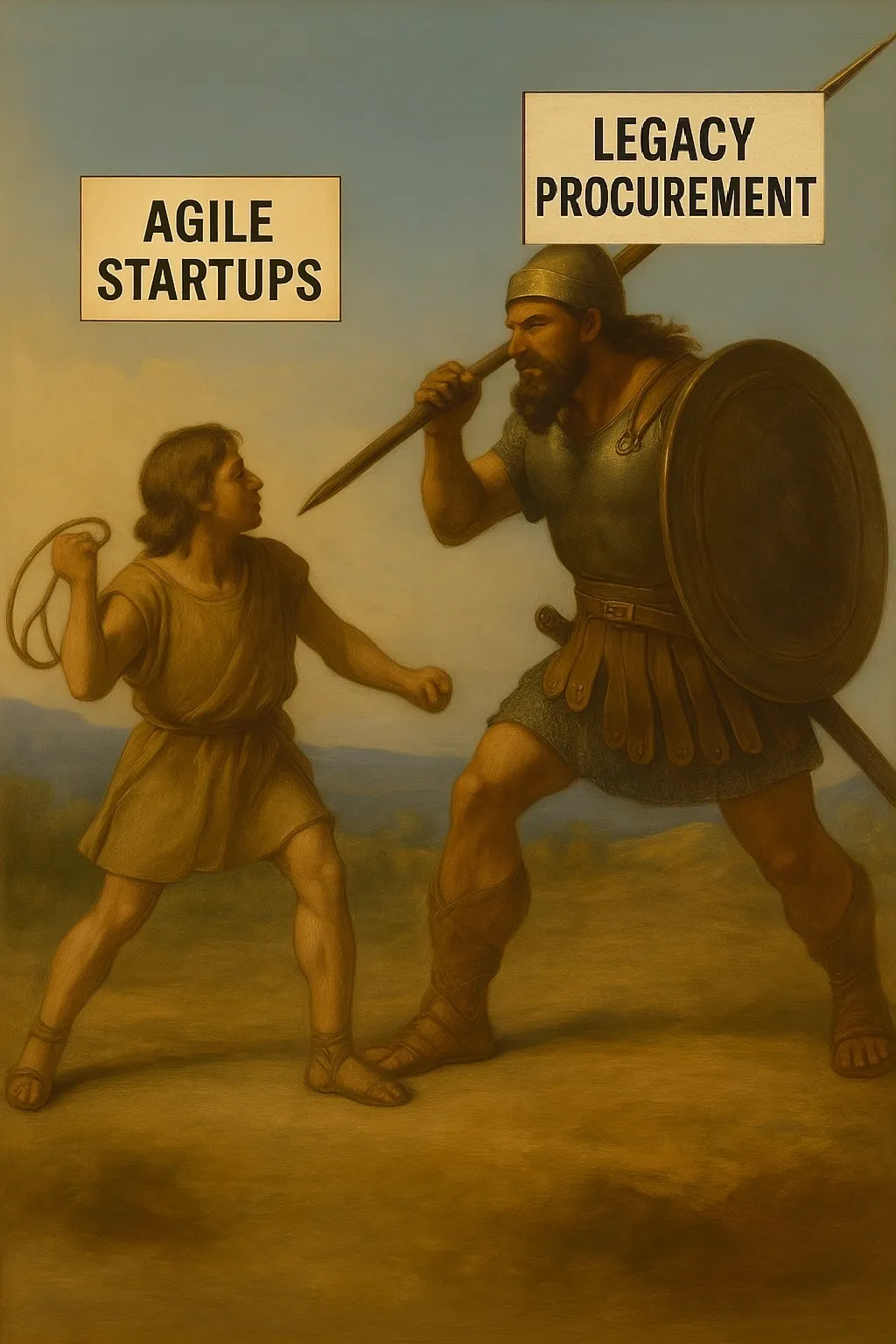
Many of the most promising autonomous platforms—particularly in the maritime environment—have proven themselves technically but have been stalled when it comes time to actually produce units at scale. Even when the faucet gets turned on, a $13 million IDIQ can take months to award and weeks to modify. By the time the contract paperwork clears, the operational need has often shifted.
How It Helps Ventures:
This section is designed to empower contracting officers to explore OTAs, scaled production buys, and other non-traditional funding methods. If you are working on dual-use platforms that can deliver ISR and payload effects for a fraction of legacy costs, you will find the door more open than ever.
Why This Matters for Dual-Use and Venture Ecosystems
APFIT has only been around since 2022. In that short time, it has become the clearest pathway for transitioning innovative prototypes into programs of record. Our firm has already submitted proposals and engaged with the process firsthand. The lessons are simple: the companies that prepare early, build compliant technical volumes, and understand the tempo of defense funding cycles are the ones that will succeed.
If you are waiting for perfect clarity, you will never act. This is the moment to take the risk and position your technology to matter.
*The Bottom Line*
This bill shows that defense innovation is not just another slogan. Congress is backing it with serious appropriations that will shape which capabilities end up in the fleet.
We are standing at the edge of a window that will not stay open forever. If you believe your work can help deter conflict, if you are ready to move faster than the bureaucracy, and if you want to see your technology make an impact instead of gather dust, now is the time to step forward.
Thanks for reading, our team is committed to guiding teams through accelerated procurement processes. Let’s make sure the next generation of systems is built before we need them, not after. If you are ready to move, join us!
To read the legislation:
https://www.congress.gov/bill/119th-congress/house-bill/1/text/pcs