Black Marlin Defense Weekly – June 25, 2025
Iran has once again raised the stakes in the Strait of Hormuz. On June 18, former Economy Minister Ehsan Khandouzi publicly called for a blockade. He proposed that all tankers and LNG carriers passing through the Strait be required to obtain Iranian permission for the next 100 days. His rationale was clear. He believes that pressuring global trade may prevent further war from escalating inside Iran.
The following day, members of Iran’s National Security Committee confirmed that closing the Strait remains an option. The timing of these statements is no accident. As global tensions rise over Israeli operations and American involvement, Iran is signaling its willingness to hit the world where it hurts: the global supply of energy and the freedom of maritime navigation.
Commercial shippers are already adjusting. Several operators are rerouting vessels, avoiding Iranian waters, or holding shipments entirely. Frontline, a leading tanker firm, has paused new contracts for transits through the Strait and repositioned assets to join escorted convoys. Maritime authorities in the UK and Greece are warning captains to treat Iranian-controlled waters as high-risk zones. A recent collision between tankers off Fujairah, reportedly linked to GPS interference, has only increased concern about electronic warfare in crowded sea lanes.
The Strategic Opportunity
While the headlines focus on risk, we believe there is also an opportunity. DARPA’s Pulling Guard program offers a practical and immediate way to reduce vulnerability in these contested waters.
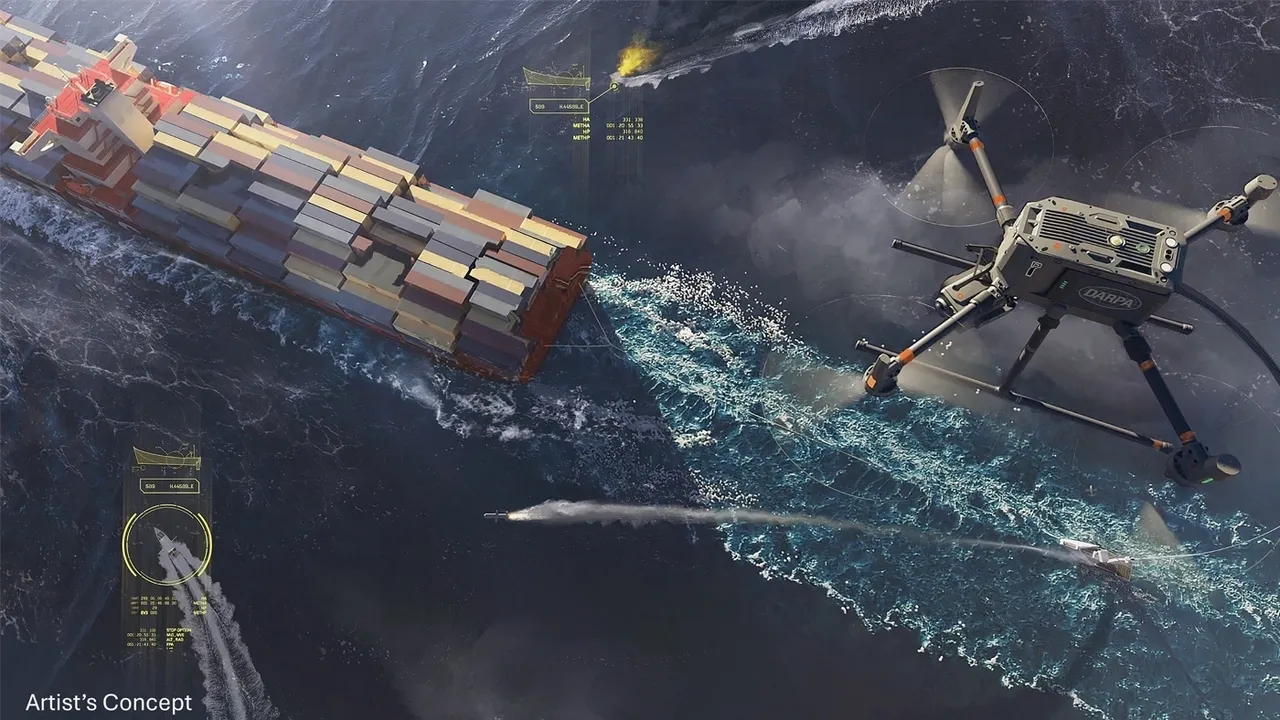
Pulling Guard aims to protect commercial vessels using autonomous escort platforms and persistent surveillance. These systems operate at lower cost than traditional naval convoys. They can be deployed at scale. Most importantly, they create a continuous layer of maritime presence that deters interference without increasing the likelihood of direct conflict.
This program is not a hypothetical solution. Phase One is now open, with DARPA seeking commercially viable USV platforms, resilient ISR integration, and formal-methods software. The goal is to build a contractor-owned, government-supported model for protecting global shipping. It will not require destroyers to escort every oil tanker. It will not rely on perfect weather or perfect intelligence. It will rely on autonomy, scale, and speed.
What This Means for You
Founders: If your platform cannot operate autonomously, persistently, and without constant oversight, it will not be selected. DARPA is looking for systems that are ready for integration and real-world stress. Focus on reliability, scale, and survivability.
VCs: This is not about long-term potential. It is about near-term deployment. If you are backing maritime autonomy, make sure the teams you support can meet real operational needs. The bar is rising.
DoD Partners: Pulling Guard is a live contract opportunity. The requirements are clear, the threat is active, and commercial shipping is looking for solutions. This is a viable pathway to fielding, not just research.
Bottom Line
Iran is threatening global shipping in the Strait of Hormuz. Commercial operators are already rerouting. This is not theoretical. Pulling Guard is a practical solution. It does not require new doctrine, just execution. The capability exists. The funding exists. The risk is immediate. It is time to move.
Footnotes
Former Iranian minister calls for Iranian control over Strait of Hormuz – Reuters
Iran’s options against foreign aggression include closing Strait of Hormuz – Reuters
Oil tanker owners reluctant to brave Strait of Hormuz – Financial Times
UKMTO NAVWARN and Hellenic Coast Guard Warnings – June 2025
Oil Tankers Collide Near UAE – Wall Street Journal