Black Marlin Defense Bi-Weekly: September 23rd, 2025
On September 10, the Royal Navy’s leadership made it clear that its fleet rebuild will prioritize uncrewed systems wherever possible. That choice is not cosmetic, it is strategic. It will shape how NATO secures the GIUK Gap, deters in the North Atlantic and Baltic, and protects subsea lifelines that keep our economies running (Defence News, 2025; USNI News, 2025).
Our closest maritime ally
The United Kingdom is the United States’ strongest naval partner. Its training standards are exceptional and exportable. Fleet Operational Sea Training sets a high bar for readiness and is used by NATO and partner navies to certify ships and crews. This level of discipline matters in an age where interoperability is a deterrent in itself (Forces News, 2025).
Geography is strategy
Control of the Greenland–Iceland–UK corridor and the eastern approaches to the North Sea and Baltic determines whether Russian submarines and gray zone vessels can threaten allied sea lines and cables. The UK’s Arctic policy underscores the importance of shared security with Denmark, Iceland, Norway, and Canada, while the Joint Expeditionary Force tightens coverage of the High North (HM Government, 2023). These relationships expand the ability to monitor, deter, and respond across some of the most vital chokepoints in the alliance.
Cables are the new center of gravity
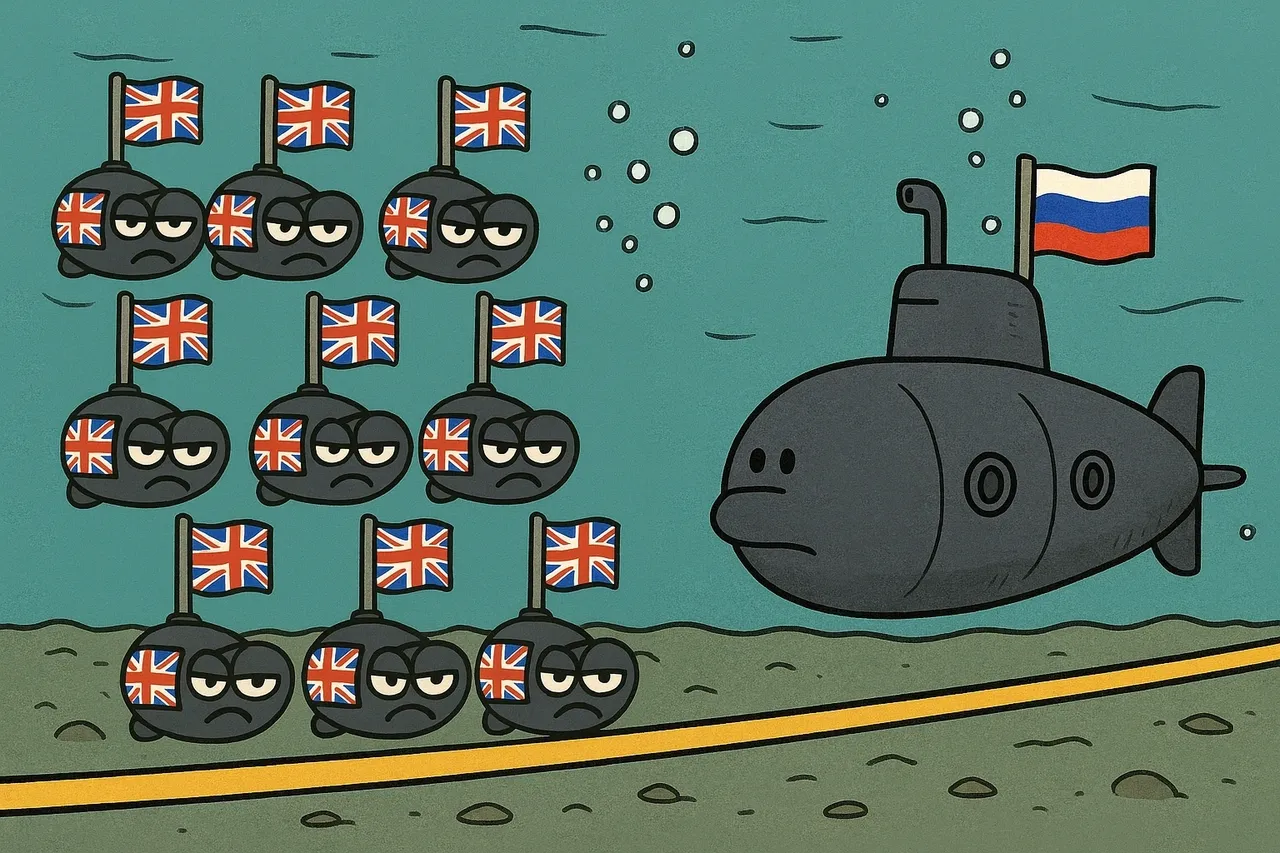
The UK Parliament’s Joint Committee on the National Security Strategy recently released a sobering report: the UK is almost entirely reliant on subsea cables, landing stations are soft targets, repair capacity is fragile, and deterrence requires both new authorities and physical presence (UK Parliament, 2025). The Royal Navy is adapting. RFA Proteus was acquired quickly to serve as a multi-role ocean surveillance ship, supporting underwater vehicles and cable protection. At the same time, the UK has tracked Russian special-purpose ships loitering near critical routes and responded with stronger monitoring and public exposure (Guardian, 2025a; Guardian, 2025b; UK Government, 2025; Business Insider, 2025).
What does “UK unmanned” really mean?
This is where the questions begin to multiply. If the Royal Navy defaults to uncrewed where practical, there are several priorities that could define the shape of this future:
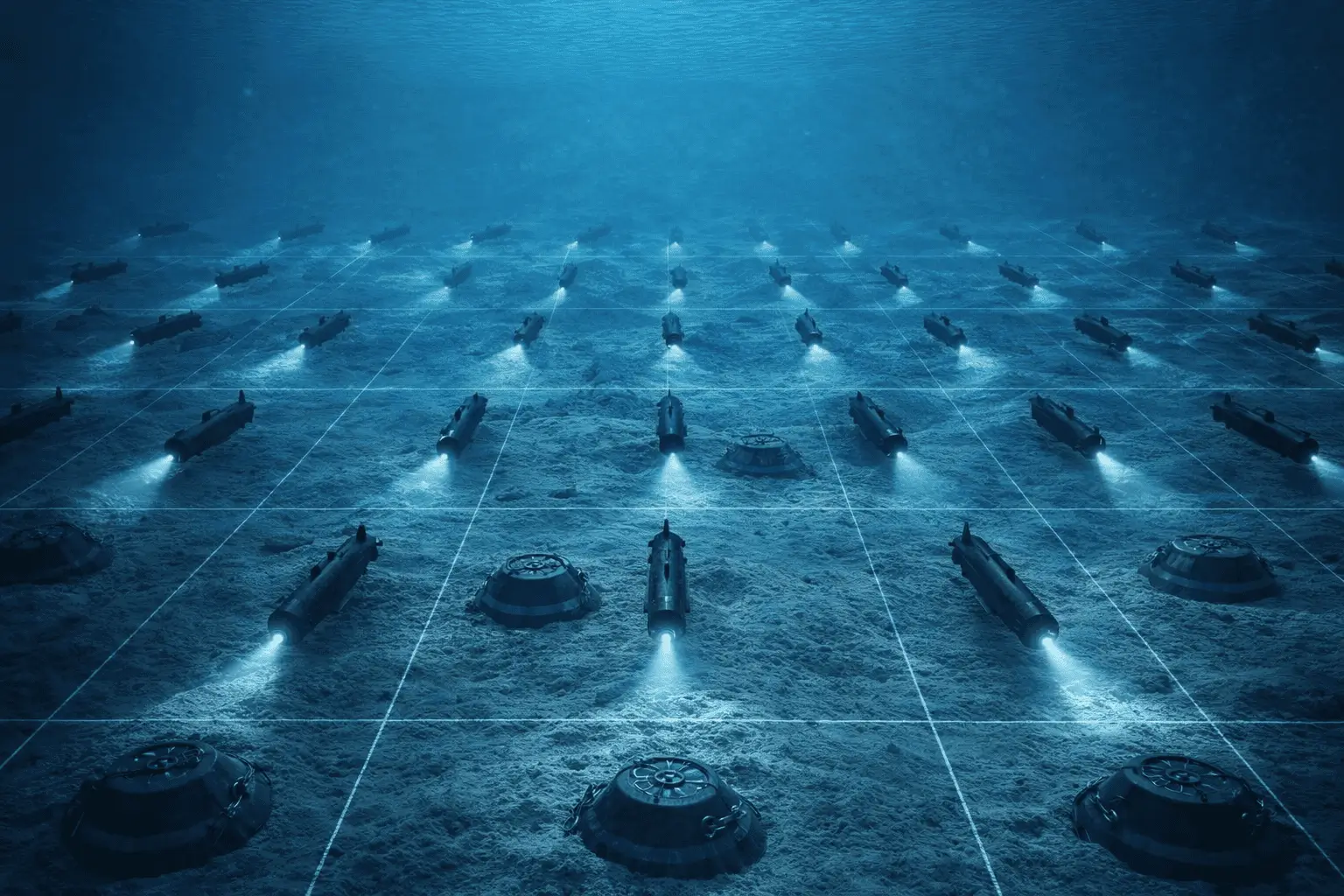
- Seabed dominance at scale. Persistent, distributed unmanned undersea systems that can map, monitor, and respond along cable corridors and pipeline grids. This ties directly to the parliamentary committee’s call for integrated monitoring, faster repair, and real deterrence (UK Parliament, 2025).
- Baltic and North Sea MCM and ISR swarms. Building on NATO’s summer demonstrations and UK-led Joint Expeditionary Force monitoring, swarms could sanitize approaches quickly, cue ASW assets, and hand off targets to crewed platforms.
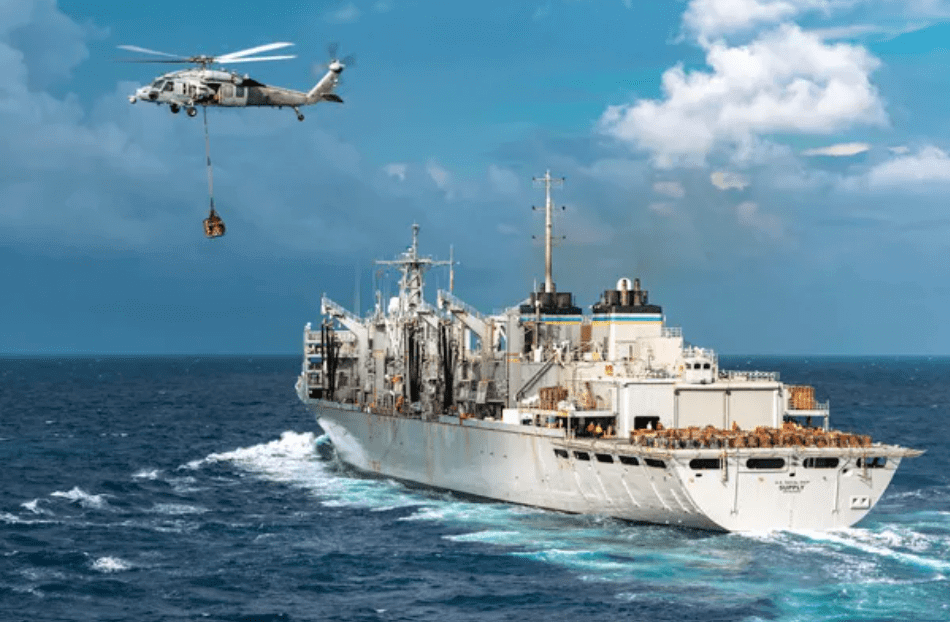
- Human capital relief. UK recruiting shortfalls make lower-manned concepts attractive. Uncrewed and optionally crewed vessels can sustain presence without requiring linear crew growth, a reality UK leaders have already acknowledged (Guardian, 2025b).
- Allied interoperability by design. Imagine Type-26 and allied ASW fleets as the crewed cores, with unmanned adjuncts plugging in through common control, communications, and data standards. The recent UK–Norway frigate deal points toward deeper ASW integration, which should extend to unmanned.
- Dual-use industrial base. DIANA and European robotics firms are already advancing long-endurance autonomous vehicles. The trend points toward more reliable, lower-cost coverage where a single operator manages many assets.
These are not abstract policy choices. They are live questions. Should the emphasis fall on seabed surveillance or on swarms for the Baltic and North Sea? Should NATO drive standards so a Danish USV, a UK UUV, and a Canadian mothership can truly operate as one? Do demographics and recruiting constraints argue for a faster pivot to uncrewed patrol, logistics, and mine countermeasures? And with the new parliamentary report in hand, what mix of deterrence, legal authorities, sovereign repair ships, and autonomous sensing will actually reduce risk to cables in crisis, not just in peacetime?
The Black Marlin Defense take
The UK is right to make unmanned the default where it adds resilience, tempo, and persistence. Pair that with world-class training, deeper Nordic integration, and a hard look at cable defense from seabed to landing station. If London and allies can get the standards and teaming right, “NATO Unmanned” will give us continuous coverage from the GIUK Gap through the Danish Straits into the Baltic, with crewed assets held for decisive moments. That is deterrence you can measure.
References
Business Insider. (2025, January). A British submarine secretly tracking a Russian spy ship hanging around undersea cables surfaced close to it to send a message, UK says. Business Insider. https://www.businessinsider.com/uk-sub-secretly-watched-russian-spy-ship-near-undersea-cables-2025-1 (Accessed September 23, 2025)
Defence News. (2025, September 10). UK Navy fleet rebuild will prioritize uncrewed systems, chief says. Defence News. https://www.defensenews.com/global/europe/2025/09/10/uk-navy-fleet-rebuild-will-prioritize-unmanned-systems-chief-says (Accessed September 23, 2025)
Euro-SD. (2025, January 24). Felstead, P. UK steps up efforts to head off Russian interference with critical undersea infrastructure. Euro-SD. https://euro-sd.com/2025/01/major-news/42222/rn-monitors-russian-spy-ship/ (Accessed September 23, 2025)
Forces News. (2025, September 11). Rumble, S., & Hearn, J. Hybrid ships in two years, hybrid airwing in five: Jenkins sets out vision for Royal Navy. Forces News. https://www.forcesnews.com/services/navy/hybrid-ships-two-years-hybrid-airwing-five-jenkins-sets-out-vision-navy (Accessed September 23, 2025)
Guardian. (2025, January 22). Royal Navy tracks Russian ‘spy ship’ closely after it enters UK waters. The Guardian. https://www.theguardian.com/uk-news/2025/jan/22/royal-navy-tracks-russian-spy-ship-closely-after-it-enters-uk-waters (Accessed September 23, 2025)
Guardian. (2025, January 17). Robots, drones and uncrewed vessels ‘likely to be default’ in future Royal Navy. The Guardian. https://www.theguardian.com/uk-news/2025/jan/17/robots-drones-uncrewed-vessels-likely-to-be-default-for-future-royal-navy (Accessed September 23, 2025)
HM Government. (2023, March). Looking North: The UK and the Arctic—The United Kingdom’s Arctic Policy Framework. UK Government. https://www.gov.uk/government/publications/looking-north-the-uk-and-the-arctic/looking-north-the-uk-and-the-arctic-the-united-kingdoms-arctic-policy-framework (Accessed September 23, 2025)
UK Government / Royal Navy. (2025, January 22). Royal Navy tracking Russian spy vessel in the Channel to keep UK safe. GOV.UK. https://www.gov.uk/government/news/royal-navy-tracking-russian-spy-vessel-in-the-channel-to-keep-uk-safe (Accessed September 23, 2025)
UK Parliament: Joint Committee on the National Security Strategy. (2025, September). Undersea cables and UK national security [Report]. UK Parliament. https://committees.parliament.uk/publications/49566/documents/264088/default/ (Accessed September 23, 2025)
USNI News. (2025, September 9). Next U.K. Pacific Carrier Deployment Will Feature Unmanned Ships in Strike Group, Says First Sea Lord. USNI News. https://news.usni.org/2025/09/09/next-u-k-pacific-carrier-deployment-will-feature-unmanned-ships-in-strike-group-says-first-sea-lord (Accessed September 23, 2025)