Back Marlin Defense Bi-Weekly: 26th September, 2025
Two recent reports, including one by Stephen Chen (“My News”), highlight a potential paradigm shift that should alarm anyone invested in U.S. undersea dominance.
China’s defense research community is openly publishing claims that artificial intelligence can reduce submarine survival rates from 85 percent to just 5 percent. In simulations, AI-driven anti-submarine warfare (ASW) systems fused sonar buoys, underwater sensors, radar, and even oceanographic variables to hunt down even the quietest nuclear submarines with a reported 95 percent success rate.
Traditionally, U.S. submarines have been the ultimate asymmetric weapon: deterrence machines capable of striking undetected. If AI-driven kill webs can strip away that invisibility, then our undersea deterrent, the backbone of Pacific strategy, faces unprecedented risk.
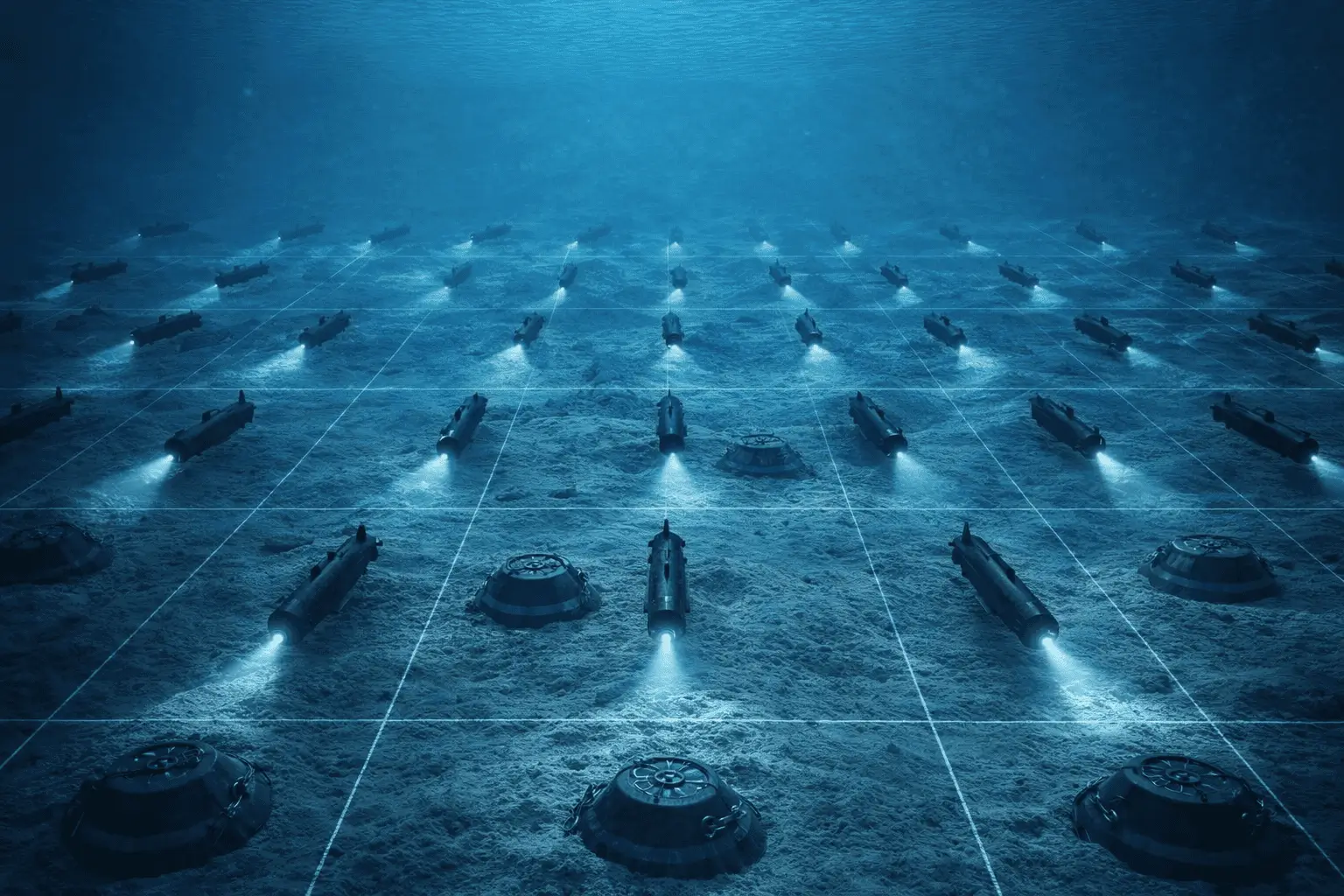
At the same time, another Chinese study describes Skynet-like “elastic mesh” kill webs: resilient, distributed networks of drones, uncrewed surface and subsurface vessels, and sensors that reconfigure in milliseconds when nodes are destroyed. In essence, the PLA is building the first distributed combat internet of things, robust against jamming and battle damage.
Why This Matters for the Pacific
- Strategic Deterrence: If survivability drops from 85% to 5%, nuclear submarines lose much of their deterrent value against surface fleets and missile networks.
- Operational Risk: Carrier groups and logistics lines, once covered by submarine dominance, could become more vulnerable.
- Industrial Base Response: U.S. shipbuilding remains bottlenecked. We cannot build our way out quickly. Instead, we must accelerate dual-use autonomy, deception tech, and distributed undersea networks of our own.
The Advisory Imperative
For those shaping maritime defense strategy, the lesson is clear: future dominance will not come from relying on legacy stealth alone. It will require integrating advanced AI, resilient communications, and multi-domain deception capabilities into undersea operations. Advisory firms and technology partners must help stakeholders understand not just the emerging threats, but also the pathways for adaptation: pairing legacy submarine platforms with autonomous swarms, investing in deception technologies, and accelerating wargaming that blends AI with human command authority. Those who understand these dynamics today will be best positioned to maintain the edge tomorrow.
The Wake-Up Call
If these claims hold even partially true, the U.S. must rethink its reliance on stealth alone. Survivability will hinge on deception, distributed sensors, and adaptive kill webs of our own. The question is not whether AI will shape the undersea fight, but whether we are moving fast enough to keep pace.
Black Marlin Defense stands ready to help the United States succeed in a “Transparent Ocean.” The days of hiding beneath the sea may soon be ending. This does not end undersea warfare, it changes the way it is fought. It provides opportunity for technological advancement, strategic disruption, and a new era of dominance. We stand with U.S. firms working to build the next generation of subsea deterrence and to ensure that American undersea power does not just endure, but evolves.
https://www.scmp.com/news/china/science/article/3326773/could-plas-ai-powered-kill-web-evolve-skynet