The Foundation: Why Contested Logistics Will Define the Next Fight
An introduction for small businesses, venture investors, and defense program officers.
What Logistics Actually Is (And Why Most People Misunderstand It)
When most people think about the word logistics they think UPS, Conex boxes, or the Supply Officer they know in the Navy. It is not.
Logistics is the movement and sustainment of national power. It is the continuous flow of fuel, parts, munitions, food, medical supplies, and critical components that allow a military to operate at all.
In civilian terms, logistics is the bloodstream of the global economy.
In military terms, logistics is the difference between a campaign that sustains momentum and one that collapses.
To ground this in reality:
More than 80% percent of global trade moves by sea.
(https://unctad.org/news/shipping-data-unctad-releases-new-seaborne-trade-statistics)
That includes the components that drive every supply chain, every manufacturing line, and every defense production system. Anything that touches metal, electronics, chemicals, or energy is ultimately tied to maritime shipping.
So when we talk about logistics, especially maritime logistics, we are talking about the foundation of both American economic strength and American military power projection.
The Reality: We Are Dependent on the Indo-Pacific for Parts, Materials, and Manufacturing
The U.S. industrial base is tightly coupled to the Western Pacific, usually through China, Taiwan, South Korea, Japan, and Southeast Asia.
- Most electronics and microelectronics originate in or pass through Asia’s manufacturing ecosystem.
- Critical minerals for batteries, sensors, and energetics are predominantly processed in China.
- Maritime shipping routes across the South China Sea and Taiwan Strait carry the majority of global container flow.
- U.S. defense contractors rely on Asian sub-tier suppliers for metal components, specialized polymers, PCBs, and power systems.
Our economy and defense industrial base sit on supply chains that run directly through regions “contested” by the People’s Republic of China.
Which leads to the next point.
What Contested Logistics Actually Means
In the maritime domain, contested logistics means the United States can no longer assume safe or uninterrupted movement of fuel, materiel, and equipment across the Pacific. Every part of the supply chain, from deep-water routes to littoral approaches, is under active surveillance or at risk of disruption.
Adversaries use:
- Coastal and over-the-horizon radar networks monitoring maritime traffic patterns
- Subsea listening posts that detect propulsion signatures and underwater movement
- Electronic warfare and AIS manipulation to confuse commercial routing
- Maritime militias and irregular fleets to pressure logistics vessels without triggering escalation
In this environment, a tanker, a container ship, or even a small resupply craft may not be supporting the mission but may be the mission. Contested logistics means sustaining operations when the ocean itself is compromised.
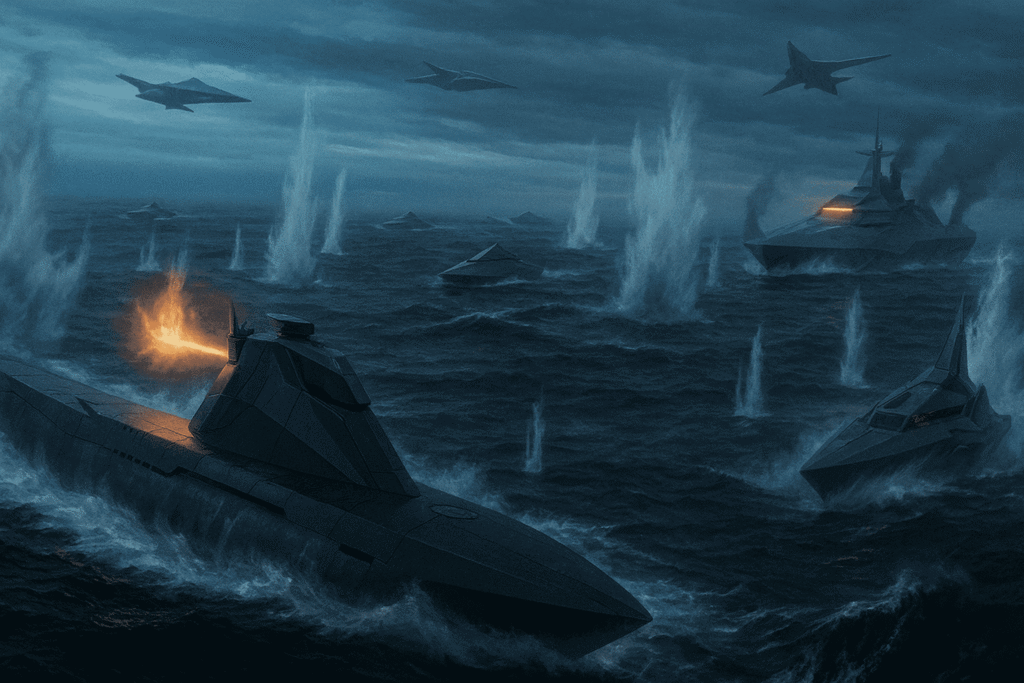
In Any Future Conflict, Logistics Will Be Target Number One
Every serious military planner, from Napoleon to Nimitz, has said some version of:
“Amateurs talk strategy. Professionals talk logistics.”
- The sinking of the Lusitania in World War I was not an accident of naval warfare; it was a deliberate attack on supply lines and national will.
- In World War II, the Battle of the Atlantic was fundamentally a logistics war where cargo ships and oil tankers were the objective, not battleships.
- In the Pacific, Japan targeted U.S. supply lines across thousands of miles of ocean.
Today’s adversaries understand this perfectly.
Logistics is the first target because logistics is the center of gravity.
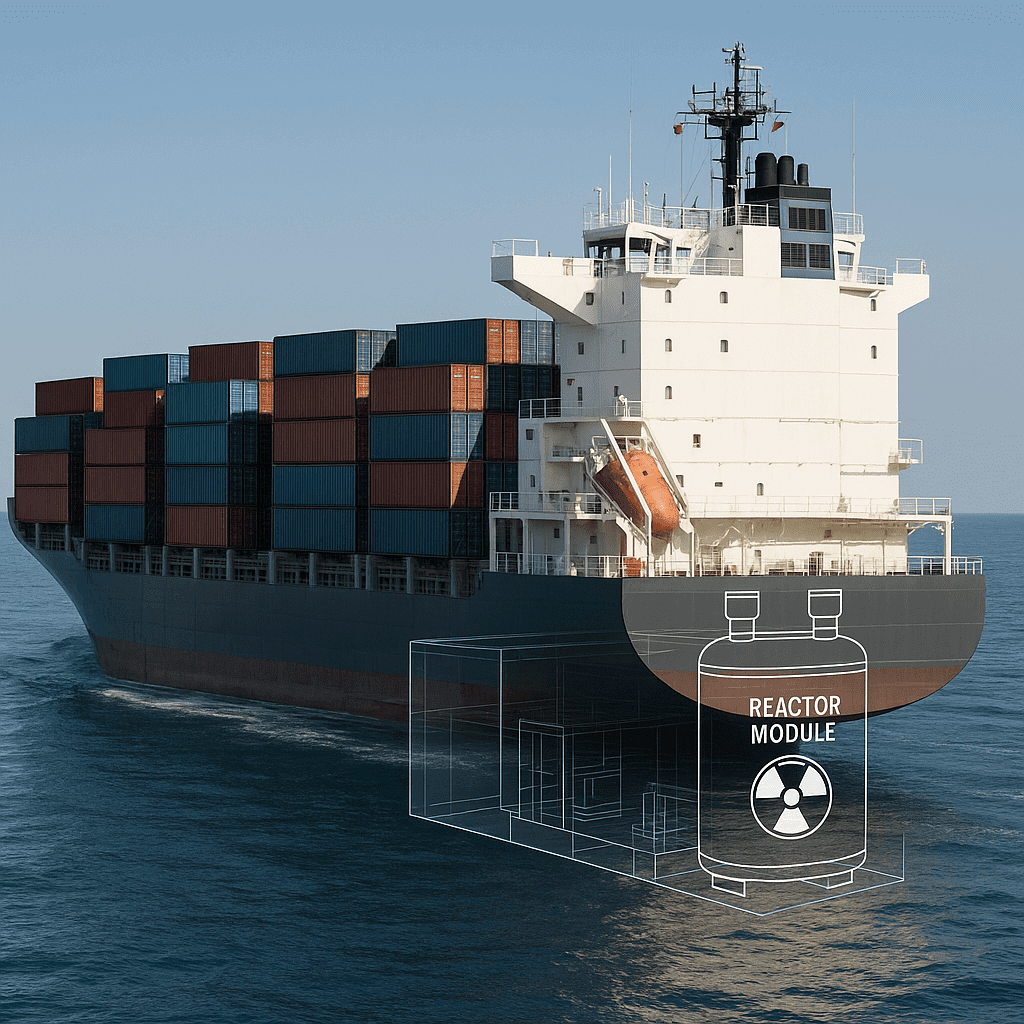
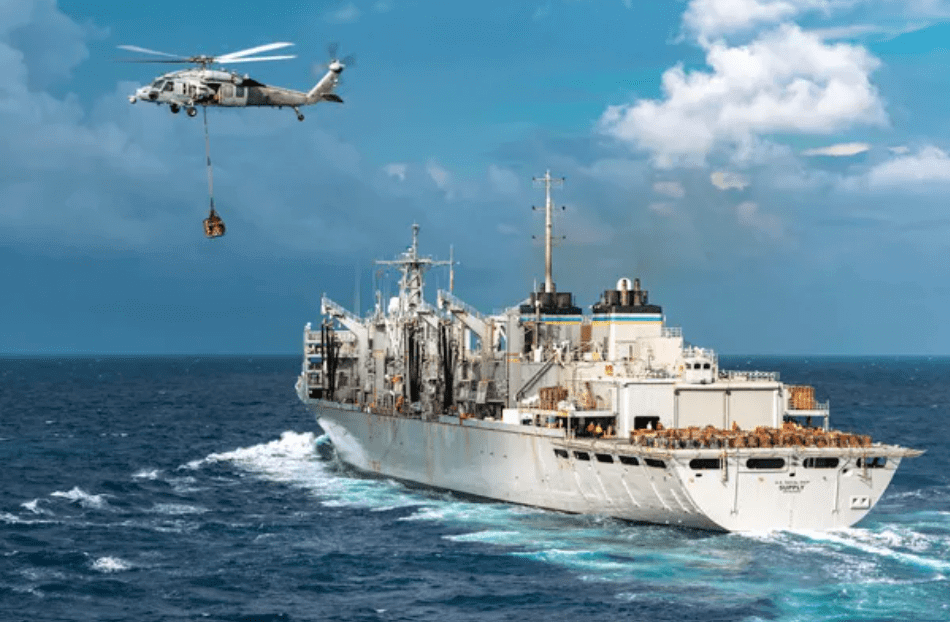
- Tankers, container ships, and replenishment vessels are soft, high-value targets.
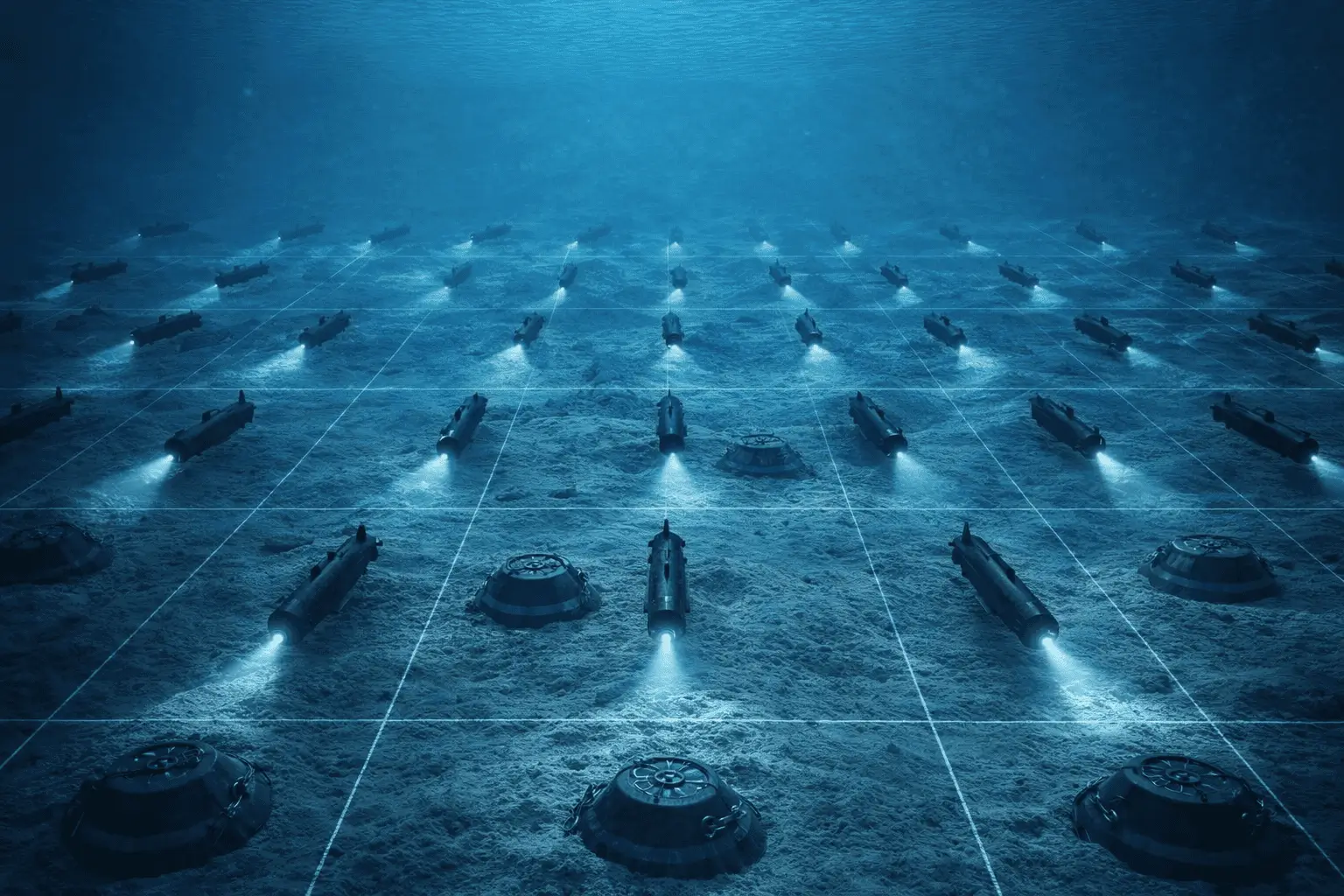
- Port infrastructure is mined
- Satellites survey using automated target recognition to exploit shipping lanes
- Cyberattacks on commercial maritime infrastructure like the Suez and Panama canal will be routine.
- “Gray zone” maritime militias can disrupt civilian shipping without crossing the war threshold.
This is the contested logistics problem.
What Contested Logistics Will Look Like
The future solution is not one thing. It is a system of systems, defined by:
Multimodal, resilient supply chains
- Sea, subsurface, air, and land nodes that do not rely on a single point of failure.
Autonomous craft running distributed patterns
- Autonomous USVs, UUVs, and attritable surface craft quietly transporting fuel, parts, and payloads.
- Hidden or camouflaged maritime caches for prepositioned materiel.
- Maritime drones performing multi-domain “last mile” delivery to dispersed units.
Additive and point-of-need manufacturing (we will talk about this next week)
- Producing parts forward, instead of shipping them across 6,000 miles.
- Reducing shipping volume to raw feedstock and energy.
Supply chain redundancy and diversification
- Not relying on one region, one material source, one factory, or one shipping lane.
- A defense industrial base that can surge without foreign bottlenecks.
Small Companies Already Leading the Way
You wanted real companies small enough to inspire others and large enough to signal seriousness. Examples include:
Firestorm
https://www.launchfirestorm.com
- Modular UAS manufacturing with materials and workflows designed for mass production and attritability.
- Demonstrates how small teams can transform manufacturing speed and cost.
Hadrian
- Automated machining infrastructure that reduces lead times for aerospace and defense components.
- Critical for scaling contested logistics manufacturing capacity.
Regent
- Innovative maritime mobility platforms that reshape littoral and regional logistics.
- Not traditional “military” platforms but highly dual-use.
Govini
- Mittiga supply chain exposure across critical materials, sub-tier suppliers, and foreign dependencies, giving DOW a real map of where the industrial base will break under pressure.
- Models disruption and resilience options that help DOW prioritize investments in hardened maritime and Indo Pacific logistics, consistent with earlier awardees focused on sustainment and industrial readiness.
Blue Water Autonomy
- provides long range autonomous maritime transport that supports distributed resupply across Pacific distances where traditional logistics vessels cannot survive.
- creates a scalable mesh logistics layer at sea that gives DOW an attritable unmanned lift option for contested maritime corridors, aligned with previous autonomy and maritime innovation awardees.
These companies illustrate the point:
Small, focused teams can reshape contested logistics faster than legacy primes.
Who Actually Needs Contested Logistics?
- The U.S. Navy, for sustaining distributed maritime operations
- The U.S. Marine Corps, for Expeditionary Advanced Base Operations
- INDOPACOM, for any campaign scenario west of the International Date Line
- SOCOM, for clandestine and low-signature resupply
- The U.S. Army, for island-hopping and sustainment nodes
- Air Mobility Command, for integration with maritime connectors
- DLA, for global prepositioning strategy
- USTRANSCOM, for resilient surface transport
- MARAD, for sealift modernization
- DHS & USCG, for security of maritime infrastructure and supply chains
And equally important:
Every defense-adjacent small business that relies on parts, components, or materials sourced from Asia.
Why This Matters to Small Businesses and Investors
If you are a small company with:
- A new material
- A manufacturing process
- An autonomy stack
- A maritime platform
- A logistics optimization tool
- A sensing technology
- An energy or propulsion innovation
…then you may be a contested logistics company without realizing it.
Venture capital cares because contested logistics is:
- Dual-use
- Scalable
- Defensible
- Anchored to real-world demand
- Positioned for long-term federal funding
Government program officers care because contested logistics is not optional. It is the core requirement of a Pacific fight.
The Bottom Line
This is not a niche topic. This is the foundation of national power in the next decade.
Contested logistics is the strategic, operational, and industrial challenge of the Indo-Pacific era.
Small companies will solve it first.
Investors will follow.
Program officers already know they need it.
Your role, with the help of Black Marlin Defense, is to get to the table. Contact us now and let us know how we can facilitate your project weather its Go-to-Market Strategy, Technical writing, program management, or Business Development, we got you covered!
Visit us on LinkedIn at:
https://www.linkedin.com/company/blackmarlindefense